Mia Lange · 2 September 2026
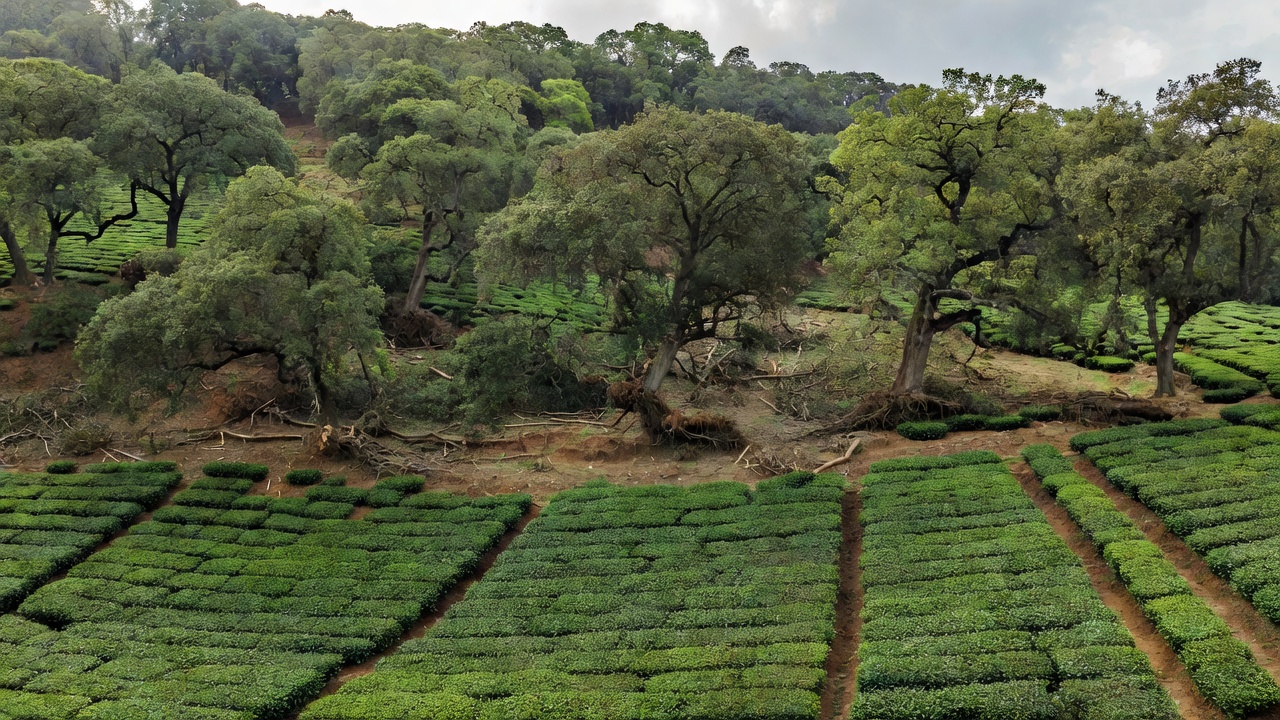
Oak forests worldwide are encountering fresh pressures as tea plantations expand into previously untouched areas. This growth is driven by rising global demand for tea, leading to land conversions that fragment habitats and reduce biodiversity in regions where oak trees once thrived. Experts note that such changes disrupt soil stability and water cycles essential for both ecosystems.
Ecological Consequences of Land Conversion
The shift from oak-dominated woodlands to tea estates results in significant habitat loss for native species. Birds, insects, and mammals that rely on oak acorns and canopy cover face declining populations. Soil erosion increases without the deep root systems of mature oaks, affecting downstream water quality. Studies indicate that tea monocultures require intensive irrigation and fertilizers, further stressing local environments already altered by climate variability. In affected zones, oak regeneration slows as seedlings compete with fast-growing tea bushes for sunlight and nutrients.
Heritage sites preserving oak traditions report accelerated degradation near plantation borders. Carbon sequestration capacity drops when diverse forests are replaced by uniform crops, contributing to broader atmospheric changes. Local communities dependent on oak resources for timber and cultural practices experience economic strain as access diminishes.
Paths Toward Balanced Tea and Oak Coexistence
Conservation strategies emphasize agroforestry models that integrate tea with native oak plantings. These approaches maintain productivity while restoring canopy layers and supporting pollinators. Policy measures include stricter zoning laws to protect remaining oak stands and incentives for sustainable farming certifications. Research into shade-tolerant tea varieties allows cultivation under partial oak cover, reducing full deforestation. Collaborative efforts between tea producers and forestry groups aim to monitor expansion through satellite mapping and restore degraded areas with oak seedlings.
Long-term success depends on international cooperation to balance agricultural needs with forest preservation. Data from pilot programs show improved biodiversity metrics when oak buffers are maintained around tea fields. Continued monitoring will determine if these methods can mitigate threats effectively while sustaining tea output for global markets.